T hücre yetmezliği olan hastalarda görülen ve hastaların 1/3 ünde beyin absesi yapan aerop, asidoresistan
boyanan flamentöz bakteri aşağıdakilerden hangisidir?
A) Staphylococcus epidermitis
B) Nocardia astroides********
C) Burcolderia cephecea
D) Bacillus cereus
E) Pasteurella multicidia
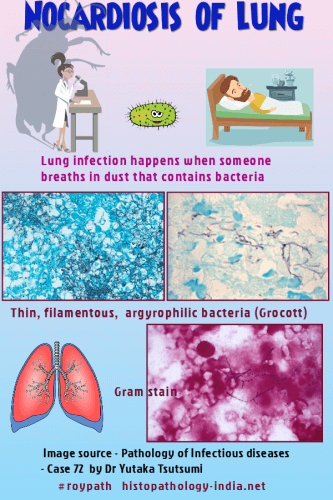
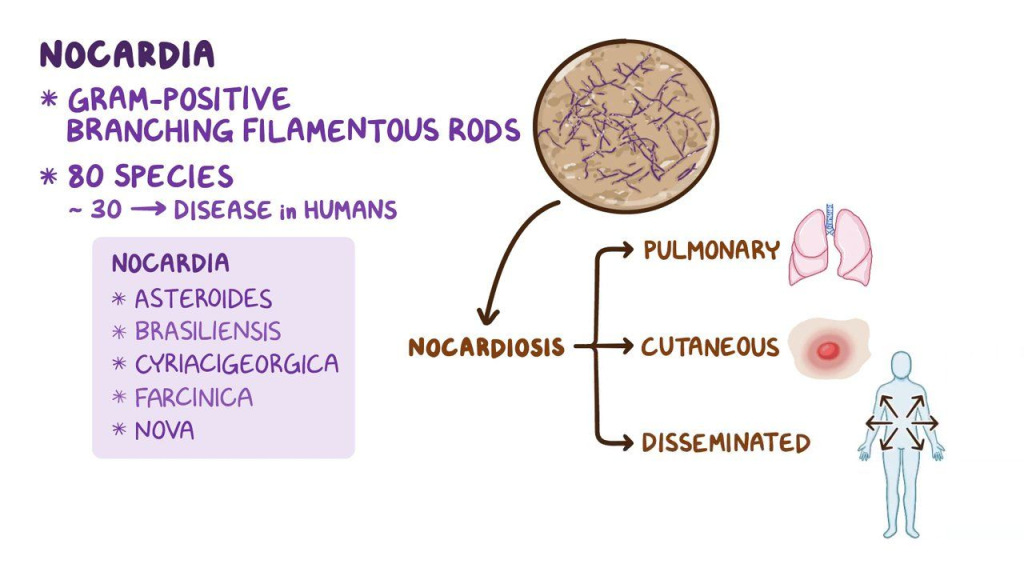
Nocardia is an opportunistic pathogen. It is an aerobe and ARB (+) bacteria. 1/3 of the patients present with brain abscess. Nocardia is a gram positive bacillus. Unlike Actinomyces, it is aerobic. It is abundant in the environment, especially in soil. It is not transmitted from person to person. It is not found in the flora. It stains weakly acid-fast with EZN staining.

They are dyed better with modified quinyon dyeing. It does not invade. It is an opportunistic pathogen. It causes disease in immunosuppressed patients. The most common infecting species are N. asteroides and N. brasiliensis. N. asteroides is responsible for 90% of human nocardiosis cases. 70% of patients are male. The agent is inhaled and colonizes the pharynx. It then settles in the lungs by aspiration. Sometimes it can spread to the CNS and kidneys.

Sometimes, mycetoma can occur when the agent enters the skin as a result of trauma. The causative agent in most cases of mycetoma due to nocardia is N. brasiliensis. It is a chronic, painless infection. Other mycetoma agents are fungi and actinomycetes.

Nocardias can cause eye infections associated with contact lenses. (Other keratitis agents associated with contact lenses are Pseudomonas and Acanthamoeba.) Trimethoprim-sulfomethoxazole is used in the treatment. Sometimes surgical treatment is required. The mortality rate in pulmonary nocardiosis is around 15%.